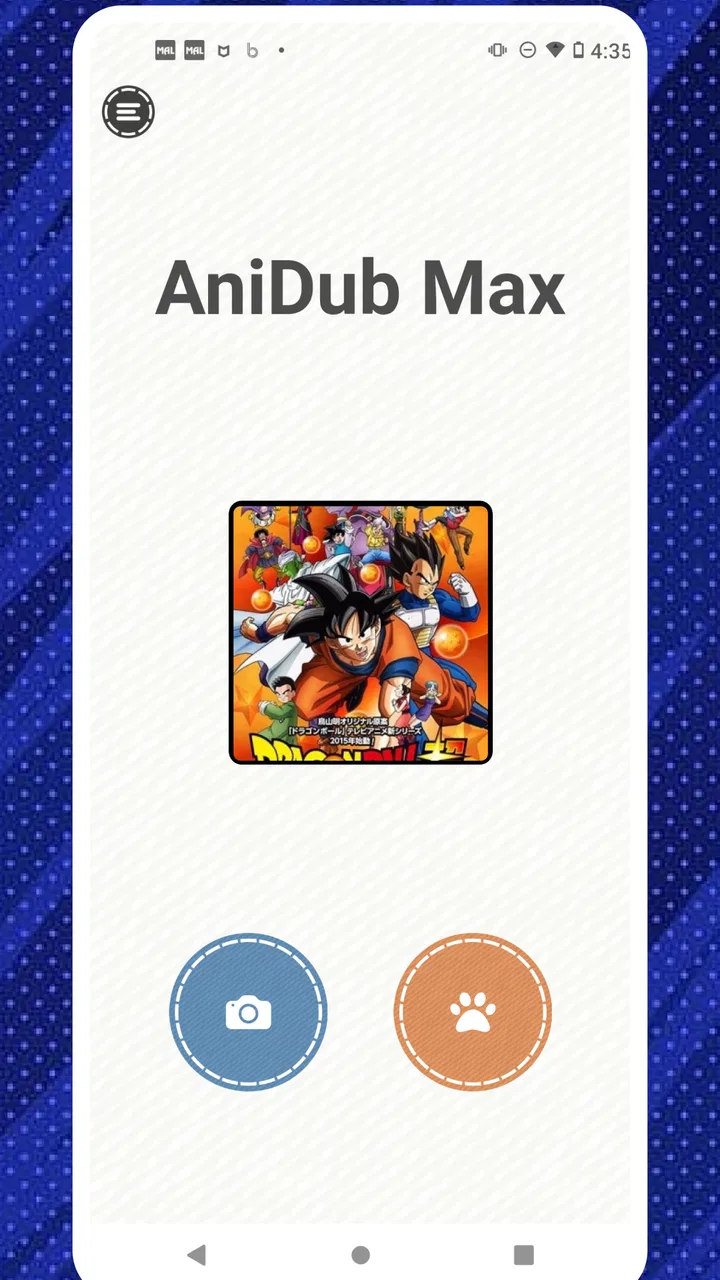
AniDub Max
- 4.1
- Rating
- 1.00M
- Installs
- Free
- Price

 Analysis by App-foxy
When I first opened AniDub Max, I expected a fairly simple pet-camera experience: point the phone at a room, keep an eye on an animal, and check in when I was away. That is still the basic idea, but the app is easier to judge when you think of it as a convenience tool rather than a complete home-monitoring system. It belongs to the photography category, is developed by Veedily, and is free to install, with optional purchases ranging from $2.99 to $39.99 per item.
My overall impression is positive, but it depends heavily on what you want from a pet camera. If your priority is a quick way to use an Android phone as a visual window into a room, this app is approachable and easy to try. If you need a dedicated camera with dependable hardware, continuous coverage, or a deep set of professional monitoring controls, a separate device may be a better fit. The useful question is not whether AniDub Max is good in isolation, but whether its phone-based approach matches your daily routine.
What I would check before choosing it
The first decision is whether you already have a spare Android phone that can stay in the room with your pet. AniDub Max needs to make sense within that setup. A spare phone can be placed on a shelf or table, moved between rooms, and reused for other tasks. That flexibility is appealing, especially if you do not want to buy another camera immediately. The trade-off is that the phone becomes part of the monitoring arrangement, so its battery, position, network connection, and screen behavior matter more than they would with a purpose-built camera.
You May Also Like

 Blood Strike: 2.5 Anniversary
Blood Strike’s Loadouts Turn Every Drop Into a Tactical Gamble
A close look at Blood Strike’s custom loadouts: how fast access to signature weapons reshapes its battle royale rhythm, rewards preparation, and narrows the gap between fights.

 Pandora - Music & Podcasts
Pandora’s Music Is Easy to Start, but Harder to Recover
Pandora’s strength is its low-effort path from a seed to a station. Its weak spot is how much confidence it asks you to place in connection, setup, and quiet recovery.

 8 Ball Pool
 Is Built on Rivalries, Rematches, and Routine
A close look at the rivalries, rematches, shared routines, and unanswered safety questions that turn a quick pool match into a persistent mobile community.

 Samsung Music
’s Quiet Strength Is Playing What You Already Own
Its reach comes less from spectacle than from dependable access to a personal library. That simplicity is both the app’s strongest retention engine and its ceiling.

 AccuWeather: Weather Radar
AccuWeather Review: A Quick, Clear Forecast for Everyday Decisions
For everyday plans, the best forecast is the one you can understand quickly. AccuWeather makes rain timing, radar, and local conditions easy to act on, with a few trade-offs.

 Hill Climb Racing
Why Hill Climb Racing Still Turns Crashes Into One More Run
A tiny car, a bumpy hill and one more upgrade: Hill Climb Racing keeps resurfacing because its simple chaos makes every near-miss feel personal.
More From Our News Desk
View All News


The app supports Android 6.0 and later, which gives it a broad compatibility range. I would still check the older phone you plan to use before building a routine around it. A device that is technically supported may not be ideal if its battery is worn out, its camera struggles in dim rooms, or it becomes unstable when left running for long periods. In practice, the condition of the spare phone is just as important as the app itself.
I also look at the type of pet situation involved. A calm cat sleeping in a familiar room is a very different monitoring problem from a puppy that moves quickly, knocks things over, or needs immediate attention. AniDub Max is more naturally suited to visual check-ins than to replacing direct supervision. That distinction is important because a phone camera can show you what is happening, but it cannot make a judgment about whether a pet is safe or respond to an emergency.
The age rating is Everyone, so the app is presented as suitable for a general audience. That makes it easy to recommend as a family-friendly utility, although adults should still decide where the phone is placed and who is allowed to access the camera view. A pet camera can unintentionally show parts of a home, so I would treat its placement as a privacy decision rather than just a technical one.
My first setup approach
I would begin with a small, controlled test instead of immediately trusting the app for a full day. Put the spare phone in the intended room, make sure the lens has a clear view, and check the image from the device you will use for viewing. Then walk through the room, move the pet’s usual bed or feeding area if necessary, and see how much of the important space is actually visible. A wide-looking view is not useful if a chair, plant, or cabinet blocks the floor where the animal spends most of its time.
One practical tip is to choose the camera position based on behavior, not room symmetry. Many people place a phone in the center of a room because it looks tidy, but pets often stay near a doorway, window, sofa, or water bowl. A slightly less attractive position can give a much more useful view. I would also avoid placing the phone on a surface that vibrates when someone walks past; small movements can make a live view frustrating to watch.
Before leaving, I would test the complete routine with another person at home. Have one person operate the viewing side while the other checks whether the pet remains visible when it moves naturally. This catches a common mistake: confirming that the camera works while standing directly in front of it, but never checking what the view looks like from the places the animal actually uses.
Where AniDub Max feels most useful
The strongest part of AniDub Max is its low barrier to entry. Because it is a free app, I can experiment with a spare phone without committing to a dedicated camera purchase first. That is especially useful for someone who is unsure whether a pet-monitoring routine will become part of everyday life. A short trial can reveal whether checking in remotely is genuinely helpful or whether it simply creates another screen to worry about.
I can also see value in temporary situations. Suppose I am staying with a relative and need to keep an eye on a pet in a guest room, or I am rearranging a home and want a quick view of an area for a few days. A phone-based solution is easier to move than a fixed camera system. I do not need to treat the setup as permanent, and I can return the spare phone to ordinary use afterward.
Another strength is its fit for simple visual reassurance. If I am at work and want to check whether a cat is resting in the usual spot, or if I have left a dog in a familiar room for a short period, a live view can answer the immediate question. That is different from needing a detailed activity history. AniDub Max makes more sense when the question is “what is happening right now?” rather than “what happened throughout the entire day?”
For new pet owners, this simplicity can be helpful. Instead of buying several accessories before understanding the animal’s routine, I can start with a phone and observe where the pet sleeps, which corners it prefers, and whether it reacts to household sounds. Those observations can guide a later decision about whether a dedicated camera, a different room layout, or no monitoring at all is necessary.
A realistic everyday example
Imagine leaving a young cat in a living room while running errands. I would position the phone so the sofa, floor area, and water bowl were visible, then use the viewing device to check in once or twice. If the cat is sleeping or calmly exploring, the app has done its job: it has reduced uncertainty without requiring a permanent camera installation. If the cat disappears behind furniture, the limitation becomes just as clear. I may know that the app is connected, but I still do not know what the animal is doing outside the frame.
That example points to a useful habit: use the app to answer specific questions, not to stare continuously at a screen. A planned check can be reassuring, while constant watching can become distracting and still fail to provide meaningful safety. I would decide in advance what I am checking—location, general behavior, or whether the pet is settled—and then stop once that question is answered.
The app’s popularity also suggests that it has reached a substantial audience. It has more than one million installs, with an average rating of 4.2 from around 8.9 thousand ratings and roughly 3.8 thousand written reviews. I treat those figures as a useful sign that many people find the concept worthwhile, not as proof that every phone and household will produce the same experience. Camera placement, device age, connection quality, and expectations can change the result considerably.
Small workflow improvements that matter
One non-obvious improvement is to create a repeatable placement rather than moving the phone casually each time. Marking the edge of the stand with a small piece of removable tape can help restore the same angle after charging. This matters because even a slight change can hide a feeding area or leave the pet’s preferred corner outside the frame.
I would also keep the viewing phone separate from the camera phone whenever possible. Using the same device for both roles defeats much of the point of remote checking. A spare tablet or another phone makes the arrangement easier to test and reduces the temptation to pick up the camera device, interrupting the view.
A third useful habit is to test the setup at the time of day when it matters most. A view that looks clear in daylight may be much less useful in the evening. I would check the room with its normal lights, curtains, and household activity rather than relying only on a bright daytime test. This is not a special feature of the app; it is a practical way to avoid overestimating what any phone camera can show.
Where a different type of solution may fit better
AniDub Max is not automatically the best choice for every pet owner. A dedicated indoor camera is usually a better fit when the goal is permanent placement. Hardware designed for that role can be easier to leave in one position, and it avoids tying up a personal or spare phone. If I want a setup that feels like part of the home rather than a temporary experiment, the dedicated-camera category deserves serious consideration.
The same applies when I need more than a live visual check. People who care about recorded history, room-wide coverage, or specialized alerts should compare AniDub Max with products built around those needs. I would not choose a simple phone-based app expecting it to behave like a full security system. The more important the monitoring task, the more valuable purpose-built hardware and clearly defined controls become.
There is also a privacy trade-off. A spare phone placed in a room may be convenient, but it is still a general-purpose device with its own accounts, notifications, and personal history. I would remove unnecessary notifications, sign out of unrelated services, and place the phone where it does not capture private conversations or visitors unnecessarily. Someone who wants a narrowly dedicated device may feel more comfortable with a separate camera designed only for monitoring.
Users with unreliable connectivity should be cautious as well. A phone camera arrangement is only useful when the devices can communicate consistently. If the home network drops often, or if the phone is placed where the signal is weak, the experience can become more stressful than reassuring. In that situation, I would solve the connectivity problem first or choose a setup with clearer offline or recording behavior, depending on the actual requirement.
People who need immediate intervention should also skip the idea of treating the app as a substitute for a person. A visual feed may reveal a problem, but it does not walk a dog, remove a dangerous object, refill water, or contact a neighbor by itself. For long absences, elderly animals, medical concerns, or pets prone to accidents, arranging human support is more important than selecting a camera app.
What switching away would involve
The cost of switching from AniDub Max to a dedicated alternative is not only financial. I would need to choose a location, install or mount hardware, learn another interface, and decide whether I want ongoing paid features. A phone-based trial is therefore useful even when I eventually move on: it helps identify the exact viewing angle, room, and monitoring times that matter before I spend money on a permanent system.
There is a smaller switching cost in the opposite direction too. Moving from a dedicated camera to a phone app may save an initial purchase, but I would give up the convenience of leaving the hardware installed. I would need to keep a spare phone available, maintain its battery, and remember that changing its position can change the usefulness of the view. For occasional monitoring, that may be acceptable. For a fixed daily routine, it can become annoying.
The app itself is free, but optional in-app purchases sit between $2.99 and $39.99 per item. I would not buy anything immediately. First, I would use the basic experience long enough to identify the feature or limitation that is actually affecting my routine. Paying to solve a problem I have not clearly experienced is an easy way to turn a low-cost experiment into an unnecessary expense.
That approach is particularly important for families. Before paying, I would agree on who operates the camera phone, who checks the view, and where the device stays. A clear routine avoids the common situation where everyone assumes someone else is watching. The app can support communication, but it cannot create responsibility on its own.
My recommendation after weighing the trade-offs
AniDub Max is worth trying if I already have a spare Android phone and want a straightforward way to check on a pet without buying dedicated hardware first. Its free entry point, broad Android compatibility, and simple visual purpose make it a sensible starting point for short check-ins, temporary arrangements, and learning an animal’s habits. The Everyone rating also makes it approachable for ordinary household use.
I would recommend it most strongly to people who can describe their need in one sentence: “I want to see what my pet is doing in this room while I am elsewhere.” That is a clear, realistic use case. I would be less enthusiastic if the sentence becomes: “I need a reliable record of everything, automatic safety decisions, and coverage I never have to think about.” That is where a dedicated monitoring product or human support is likely to be the better answer.
My advice is to test it as a small system rather than judging it from the download alone. Use a suitable spare phone, choose the position according to the pet’s actual movement, test the view in normal lighting, and check the connection from outside the room. Then decide whether the app reduces uncertainty or simply adds maintenance. That short evaluation will tell you more than a generic feature list.
Version 1.3.5 is the version I would look for when installing it, and I would keep the app and the camera phone updated as part of normal maintenance. I would also review the setup whenever furniture changes or the pet develops a new routine. A camera view is not permanent knowledge; it becomes useful only when it continues to match the room and the animal.
In the end, I see AniDub Max as a practical bridge between having no visual check at all and investing in a dedicated pet-camera system. It is not a replacement for supervision, and it is not the right answer for every advanced monitoring need. But for a quick, affordable experiment using equipment I already own, its biggest strength is the ability to start small and make a better-informed decision later. That is why I would recommend giving it a careful trial, while keeping expectations firmly centered on simple visual reassurance.
FAQs for AniDub Max
01What is AniDub Max and what features does it offer?
AniDub Max is a comprehensive streaming app designed for anime enthusiasts. It offers a vast library of dubbed anime content, ensuring high-quality video and audio. Users can enjoy features like personalized watchlists, offline downloads, and regular content updates. The app's user-friendly interface makes browsing and streaming seamless.
02Is AniDub Max available for both Android and iOS devices?
Yes, AniDub Max is available for both Android and iOS platforms. The app can be downloaded from the Google Play Store for Android users and the App Store for iOS users. It ensures compatibility with most devices, providing a smooth and enjoyable streaming experience across different operating systems.
03Does AniDub Max require a subscription to access content?
AniDub Max offers both free and premium subscription options. While the free version provides access to a limited library with ads, the premium subscription unlocks the full range of content without interruptions. Users can choose the plan that best suits their needs and budget, enhancing their viewing experience.
04How frequently is the content updated on AniDub Max?
AniDub Max is committed to keeping its content fresh and engaging. The app regularly updates its library with the latest anime episodes and movies. Users can expect new releases and popular series to be added weekly, ensuring they always have something new to watch and enjoy.
05Is it possible to download anime content for offline viewing on AniDub Max?
Yes, AniDub Max allows users to download anime episodes and movies for offline viewing. This feature is particularly useful for those who want to watch content without internet access. Downloaded content remains accessible within the app, ensuring convenience and flexibility for users on the go.
Pros
- Extensive anime library available.
- High-quality streaming options.
- User-friendly interface design.
- Regular updates with new releases.
- Supports offline viewing mode.
Cons
- Contains occasional ads during streaming.
- Limited subtitle customization options.
- No parental control settings.
- Requires stable internet for HD streaming.
- Some content may have regional restrictions.

AniDub Max
Gallery